
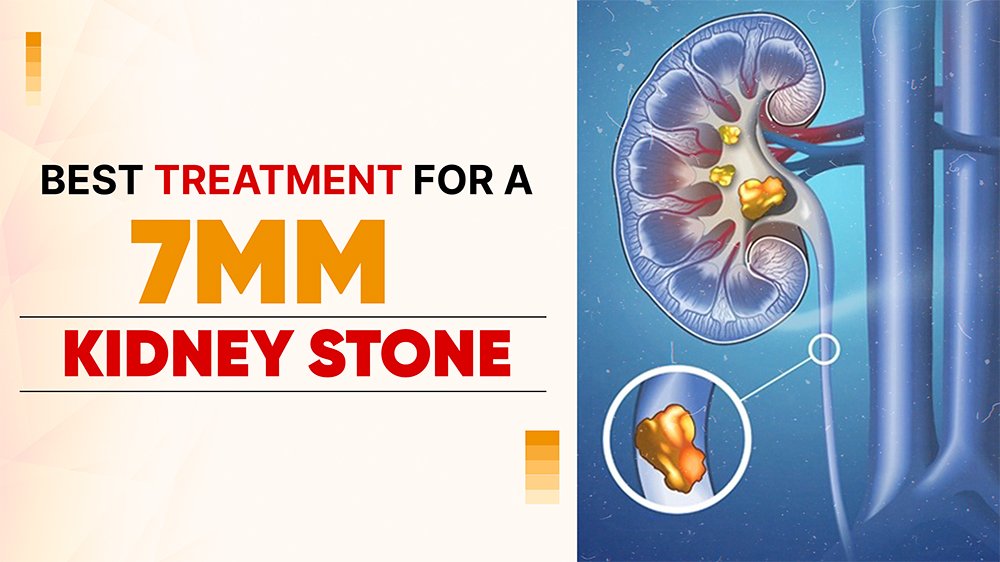
Kidney stones vary in size, and a 7 mm kidney stone is considered moderately large, making natural passage unlikely. It is also very likely to cause pain, kidney blockage, urine blockage or even infections. Some patients ask if a 7mm kidney stone can dissolve on its own, or what’s the best way to treat a 7mm stone in the kidney or lower ureter.
It’s important to understand how stones of this size behave so that appropriate and safe action can be taken at the right time. In this blog, we will explain the characteristics of a 7 mm kidney stone, its causes, its symptoms, its chances of passing naturally, and its best treatment options.
Understanding a 7mm Kidney Stone
A kidney stone forms when minerals such as calcium or uric acid crystallise and accumulate in the urinary tract. While small stones often pass naturally, a 7mm stone in the kidney or ureter is more complicated.
7mm stone in the kidney: Stones of this size lodged in the kidney can cause discomfort and may obstruct urine flow over time.
7mm stone in the lower ureter: These are more painful and often block urine flow, leading to severe symptoms.
Confused About Your Symptoms? Get Expert Guidance Today
Can a 7mm Kidney Stone Dissolve on Its Own?
Patients commonly ask if a 7mm kidney stone can dissolve naturally.
Small stones (<5mm): High chances of passing naturally with fluids and medicines.
7mm kidney stone: The chances of natural passage are very low. Medicines may help a small number of patients, particularly when the stone is located near the ureter and symptoms are mild.
Don’t Delay Your Health — Talk to a Specialist Now
Your Health Deserves Immediate Attention. Book Your Visit or Chat Now.
Symptoms of a 7mm Kidney Stone
Such symptoms are brought about by a 7mm kidney stone in addition to the ureter:
- Colicky pain of the back, belly, and groin. It may be felt on 1 or both sides.
- Blood in the urine which is termed as hematuria.
- Urinary stinging, the sense of urgency and frequent cycles of micturition.
- Being nauseous and vomiting as well.
- An affected person may also feel as if urine has to be stored or the volume is deficient.
Best Treatment Options for a 7mm Kidney Stone
1. Medication and Lifestyle Management
Medicines may be helpful for very few patients. This is especially true if the stone occurs near the ureter.
- Pain relievers.
- Alpha-blockers.
- Increased hydration and dietary changes.
Your Health Deserves Immediate Attention
2. Minimally Invasive Procedures
Modern urology offers safe, effective and minimally invasive treatments for kidney stones of this size.
a) Extracorporeal Shock Wave Lithotripsy (ESWL)
- Uses shock waves to break the 7mm stone in kidney into smaller fragments.
- Best suited for stones located in the kidney or upper ureter.
- Non-surgical done as an outpatient procedure.
b) Ureteroscopy (URS)
- Recommended for a 7mm stone in lower ureter.
- A thin scope is passed through the urethra and bladder to reach the ureter.
- The stone is either removed directly or broken into pieces using a laser.
c) RIRS (Retrograde Intrarenal Surgery)
- Advanced endoscopic procedure for stones inside the kidney.
- Flexible ureteroscopes and lasers are used to break stones safely.
- Minimal recovery time and very effective for medium-sized stones.
3. Advanced Surgical Options
In rare cases where the stone is multiple, complex, or associated with infection, PCNL (Percutaneous Nephrolithotomy) may be advised. This is a keyhole surgery to remove stones directly from the kidney.
Recovery and Prevention Tips
- When treating an individual with a 7 mm kidney stone, it is important to prevent recurrence of the stone. Recommendations include the following:
- Drink 2 to 3 liters of freshwater every day.
- Restrict salt intake and avoid oxalate-rich foods such as spinach and limit animal protein.
- Follow-up imaging and urine testing to check for any recurrence.
- Eat a well-balanced diet along with exercising regularly and avoid aspirating fluids.
Choosing the Right Hospital for 7mm Kidney Stone Treatment
Treating a painful 7mm kidney stone requires the expertise of an experienced urologist and access to advanced medical technology. Optimus Hospital, recognised among the best multispecialty hospital in Gurgaon, provides modern and minimally invasive treatments for kidney stones, helping patients receive effective care with faster recovery.
The hospital offers advanced procedures such as ESWL, URS, and RIRS, which help break or remove stones with minimal discomfort and shorter recovery time. With advanced diagnostic tools and personalised treatment plans, patients receive comprehensive care focused on effective stone removal and long-term kidney health.
Conclusion
A 7 mm kidney stone should not be ignored, as it rarely passes naturally and may lead to severe pain, urinary blockage, infection, or kidney complications. Timely diagnosis and the right treatment approach are important to prevent further health issues.
Modern urology now offers safe and minimally invasive procedures such as ESWL, URS, and RIRS, which can effectively remove or break the stone with faster recovery. Consulting an experienced medical team and getting proper evaluation at the right time can help ensure effective treatment and protect long-term kidney health.